
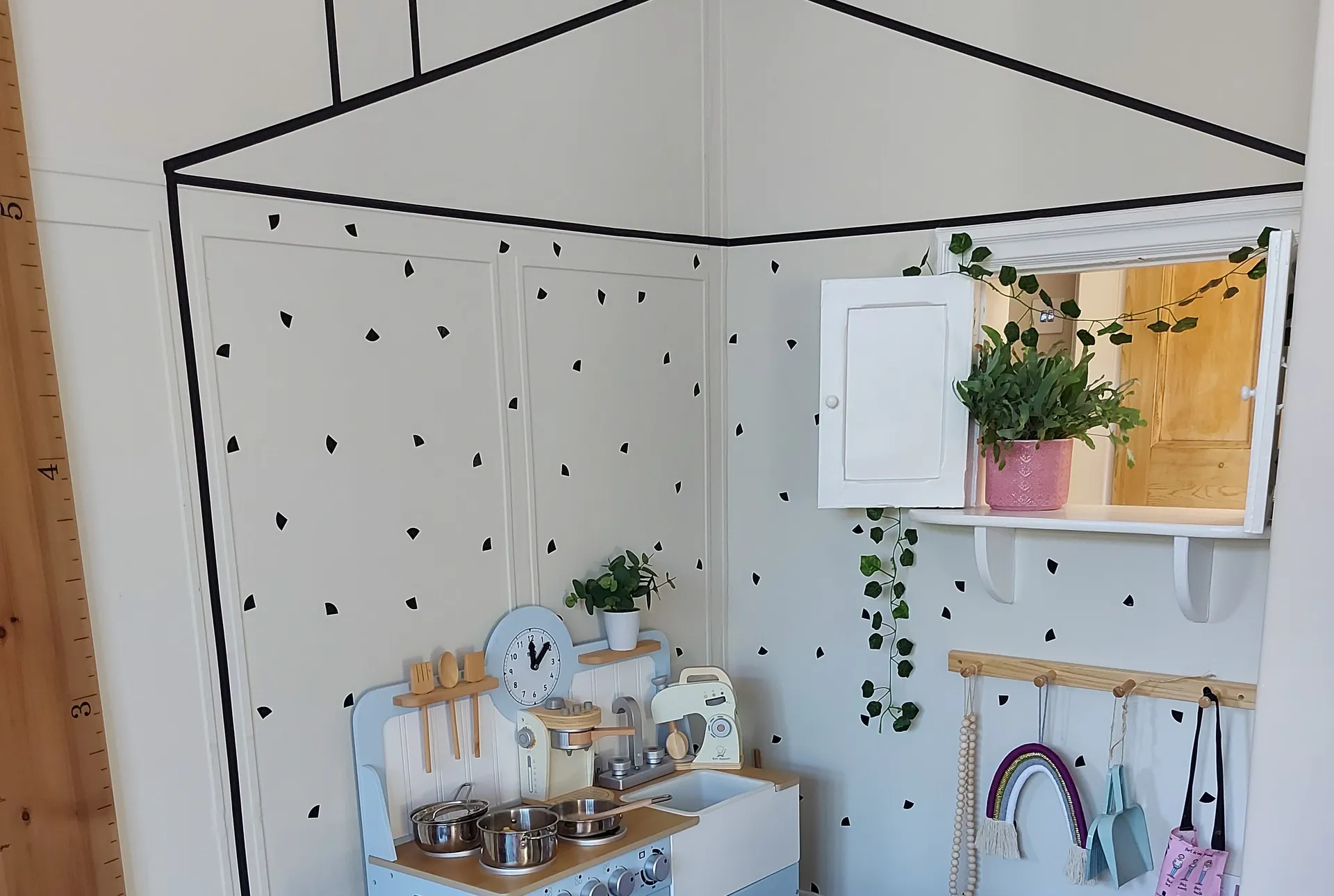
A small unused corner can become a useful play space without converting an entire room. Indoor play nooks work especially well in bedrooms, living rooms, hallways, loft areas, and other overlooked spaces where a few carefully chosen features can create a clear activity zone.
The strongest play nooks aren’t packed with equipment. They give children enough room to focus, move safely, and put materials away afterward.
Choose the Corner Based on the Activity
Start by deciding what kind of play the area should support. Reading requires less floor space than building projects, while pretend play may need room for movement.
Before adding furniture, observe traffic through the area. Broader residential space ideas can be useful when thinking about how small zones fit into the larger flow of a home.
A nook beside a doorway may look unused but still function as an important walking path.
Use Vertical Space Carefully
Wall-mounted shelves, low book ledges, hooks, and narrow storage can increase capacity without consuming much floor area. Keep anything children access independently at a safe, comfortable height.
Ideas from efficient home layouts can translate well to play spaces: use the wall for organization so the floor remains available for the activity itself.
| Unused Area | Possible Play Nook | Helpful Storage |
|---|---|---|
| Bedroom corner | Reading space | Book ledges |
| Living room edge | Building zone | Low baskets |
| Wide hallway end | Drawing nook | Slim cart |
| Under a loft | Pretend play | Open cubbies |
Define the Nook Without Building Walls
A rug, floor mat, small shelf, or change in lighting can visually identify the play area. Children often understand boundaries better when the space has an obvious edge.
A thoughtfully planned indoor family setting doesn’t need a permanent partition to create separate functions. Even a small round rug with two baskets can communicate where play begins and where toys should remain.
Keep Furniture Proportional
Large toy kitchens, oversized beanbags, or deep storage cabinets can overwhelm a small corner. Choose furniture according to the available footprint rather than buying standard playroom pieces.
Compact furniture leaves more usable floor area and makes the nook feel intentional instead of cramped.
Add Storage That Can Reset Quickly
A play nook loses its advantage if toys constantly spread into surrounding rooms. Use one or two accessible containers for whatever belongs in that specific zone.
A reading nook might need a low book shelf and a basket for blankets. A building area might need two bins. Limiting storage also limits how much material can accumulate in the corner.
What Small Play Nooks Often Get Wrong
The most common problem is trying to make one tiny space support every possible activity. Too many themes produce too many toys, storage containers, and furniture pieces.
Another mistake is ignoring lighting, outlets, heating vents, sharp furniture corners, or nearby stairs. A visually appealing location isn’t automatically a practical play area. Evaluate how children will move through the space before adding shelves, cushions, or equipment.
Frequently Asked Questions
How small can an indoor play nook be?
A nook can be quite compact if the activity fits the available space. Reading, puzzles, drawing, and small-world play often need less room than active movement or large construction toys.
What should I put in a play nook?
Choose a small number of items tied to one main activity. Useful basics might include a rug or mat, comfortable seating, a few toys or books, and simple storage that children can reach safely.
Can a living room corner work as a play nook?
Yes. A living room corner can work well when the play area has clear boundaries and storage. Choosing materials that can be reset quickly helps the main room return to its regular function after play.
Turn Forgotten Space Into Useful Space
A successful indoor play nook doesn’t depend on having a large home. It depends on matching the activity to the corner, keeping furniture proportional, and creating a storage system that prevents play materials from spreading outward.
Start small. One defined activity, one comfortable surface, and a little accessible storage may be enough to transform an ignored corner into a place children choose to use every day.