
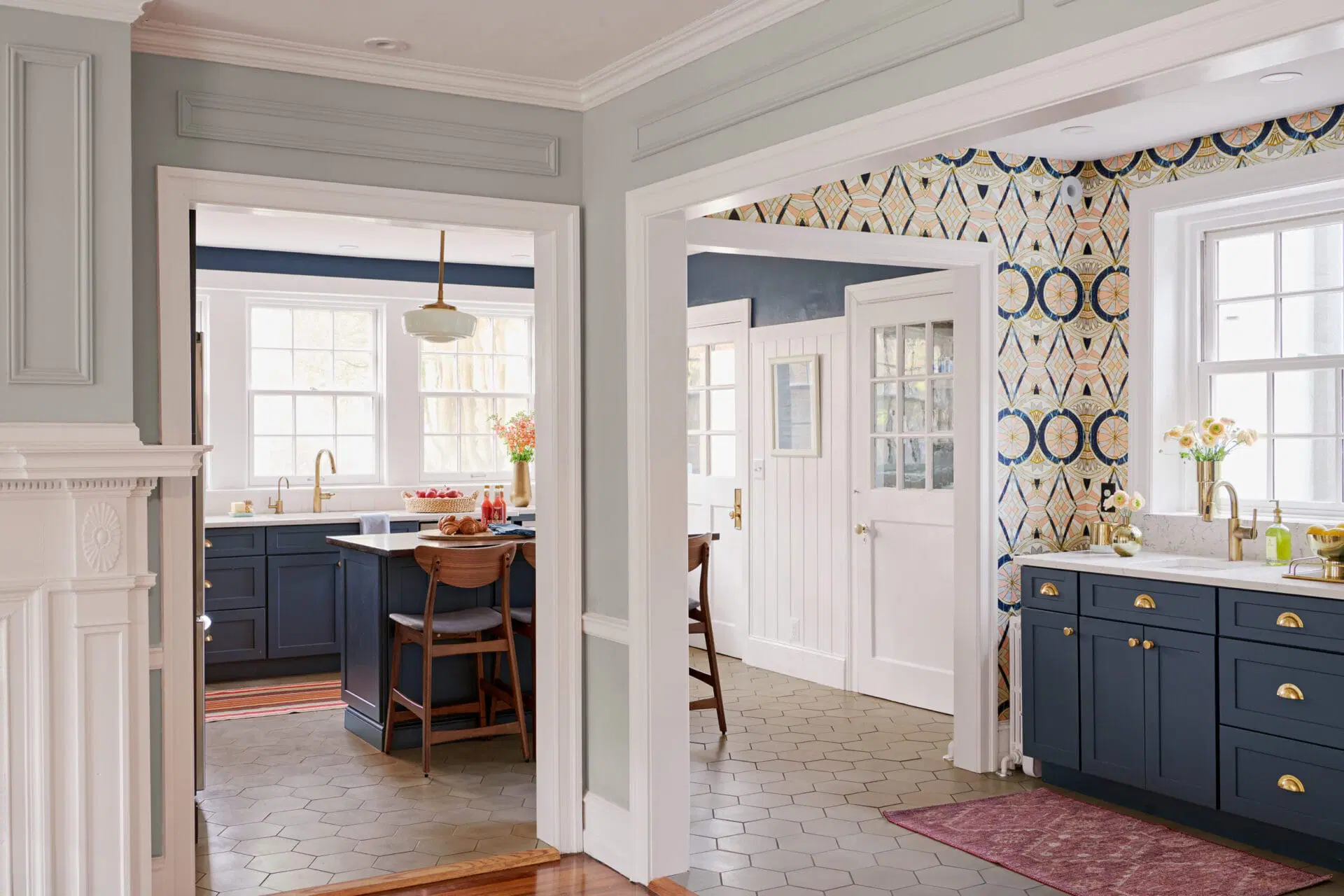
Plain door openings can make an otherwise finished room feel incomplete. Door casing ideas offer a relatively contained way to add architecture without replacing floors, cabinets, or major wall finishes. From simple flat boards to layered traditional trim, casing helps define openings while connecting doors to baseboards and the overall style of the interior.
Choose a Profile That Fits the Architecture
Simple square-edged casing works well in contemporary, transitional, and understated interiors. It creates definition without demanding attention.
Traditional homes can support more detailed profiles, including stepped edges, backband, or wider top pieces. The key is consistency: decorative casing looks more convincing when nearby baseboards and other moldings share related proportions.
Around rooms with prominent hearths, decorative fireplace concepts can offer useful examples of how trim profiles establish hierarchy. Door casing should support larger focal features instead of competing with them.
Try a Stronger Header Above the Door
One way to create a more custom appearance is to make the top casing different from the sides. A slightly deeper header, simple cap, or subtle projecting detail can create architectural emphasis.
This works particularly well on openings between major rooms, such as a living room and dining room. Smaller bedroom or closet doors may look better with simpler treatment.
Looking through interior finish inspiration can help clarify how much trim detail a room can support. Repeating one distinctive header throughout a home often looks more coherent than using several unrelated casing styles.
| Casing Approach | Best Character | Watch For |
|---|---|---|
| Flat stock | Modern and simple | Uneven wall surfaces |
| Mitered profile | Familiar traditional look | Precise corner cuts |
| Header detail | Custom appearance | Too much visual weight |
| Painted wall-color casing | Subtle finish | Reduced contrast |
Use Color to Control How Much Trim Stands Out
White casing creates clear borders around doors and is easy to coordinate across different rooms. It works especially well when baseboards and window trim share the same finish.
Painting casing the wall color produces a quieter effect. The profile remains visible through shadow and depth, but the opening doesn’t become a strong graphic outline.
Exterior trim follows related principles, and home exterior inspiration can demonstrate how color either emphasizes or softens an opening. Indoors, these contrasts are even more noticeable because doors are viewed at close range.
Connect Casing Cleanly to Baseboards
The lower joint where casing meets baseboard can determine whether the installation looks custom or unfinished. Matching thicknesses makes the transition easiest.
When profiles differ, a plinth block can create a deliberate meeting point. This can suit traditional interiors, although it may feel unnecessarily decorative in a minimal room.
Consistent reveals around the door frame also matter. Uneven gaps catch the eye quickly, even when the casing itself is expensive.
Details That Can Make Door Trim Look Worse
Adding too many layers is an easy mistake. Backband, ornate headers, plinth blocks, and contrasting paint may all work individually, but using everything together can overwhelm an ordinary opening.
Another problem is changing casing style from room to room without a clear reason. Small variations can be fine, yet a house feels more coherent when the same trim language repeats.
Poor cuts are harder to hide on wide casing because the joints become more visible. Accurate measuring and clean finishing often matter more than choosing a complicated profile.
Frequently Asked Questions
Does wider door casing look more expensive?
It can create a stronger architectural presence, but width alone doesn’t determine quality. Proper proportions, clean joints, and coordination with baseboards usually have a larger effect.
Should door casing and baseboards be the same color?
They commonly match, which creates continuity throughout the room. Different colors can work when the contrast is intentional and repeated elsewhere in the design.
Can existing door casing be upgraded without replacing it?
Sometimes. Adding a backband, changing paint, installing a new header detail, or improving joints can refresh existing casing if the original material remains in good condition.
Make the Opening Feel Intentional
Custom-looking door trim doesn’t require complicated carpentry everywhere. Choose one clear casing language, repeat it consistently, and pay close attention to the joints where trim meets doors, walls, and baseboards. A restrained profile installed carefully often creates a more convincing architectural finish than an elaborate design that doesn’t suit the room.