
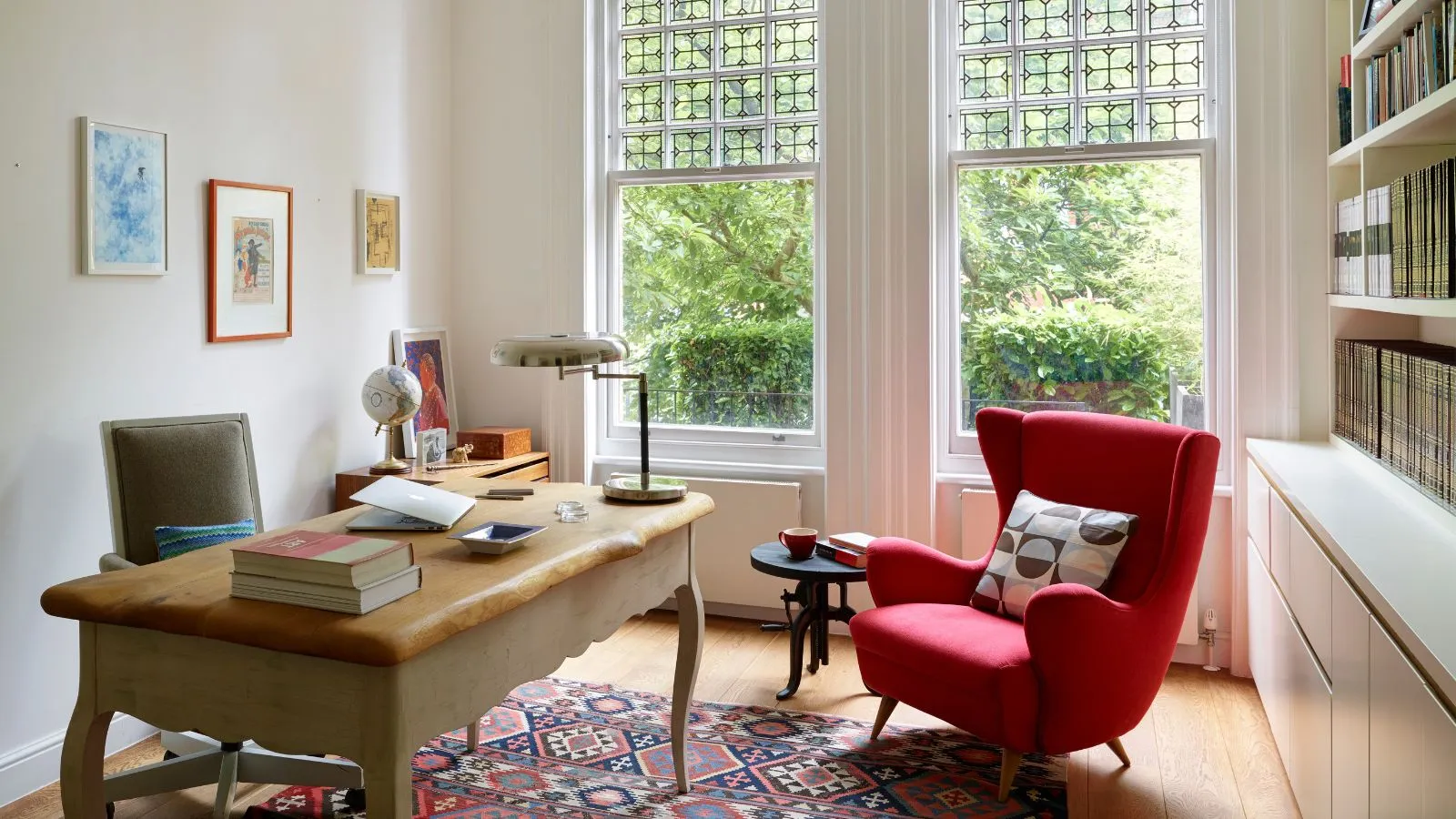
A home office that feels fine for twenty minutes can become uncomfortable after several hours. Desk location, sunlight, floor temperature, airflow, chair support, and equipment heat all affect how the room feels during a full workday. Small environmental changes often improve comfort more effectively than repeatedly adjusting the thermostat.
Place the Desk in a Better Comfort Zone
Avoid positioning your chair directly beside a cold exterior wall, beneath a strong vent, or in intense afternoon sun when another arrangement is possible. These locations can create temperature discomfort that isn’t obvious elsewhere in the room.
A desk near natural light can work well, but glare and heat gain should be considered alongside the view.
Keep Air Moving Around the Work Area
Computers, monitors, chargers, and lighting all release some heat. In a small office, that heat can accumulate around the desk when air movement is limited.
Browsing home office styling ideas can help inspire arrangements that leave more open space around vents, windows, and equipment while still keeping everyday work items within reach.
Adjust Airflow Before Changing the Thermostat
If your upper body feels warm while your feet stay cold, changing the whole-house thermostat may solve one problem and create another. A small fan, rug, changed vent direction, or different desk position may provide a more targeted improvement.
Make the Floor and Chair Zone More Comfortable
Hard flooring often feels colder during long periods of sitting because your feet remain in the same place. A rug or mat can make the work zone feel warmer without covering the whole room.
Good desk layout inspiration can also help create enough clearance for chair movement while keeping heating or cooling outlets unobstructed.
| Office Discomfort | Possible Fix | Main Benefit |
|---|---|---|
| Cold feet | Add rug or mat | Warmer desk zone |
| Hot afternoon sun | Use adjustable shade | Lower heat gain |
| Stagnant air | Add gentle circulation | More even comfort |
| Direct vent blast | Redirect register | Fewer drafts |
Control Light and Heat Together
Window coverings shouldn’t be treated only as decoration. Adjustable shades can reduce glare on screens while limiting unwanted solar heat during warmer parts of the day.
Adding comfortable workspace details such as softer textiles, layered lighting, and an uncluttered seating area can also make long work sessions feel less physically harsh.
Where Home Office Comfort Fixes Fail
One common mistake is solving every discomfort with another portable device. A heater under the desk, fan on the table, bright task lamp, and several electronics can create clutter, electrical load, and competing temperature effects.
Another mistake is focusing on room temperature while ignoring posture and movement. A perfectly heated office can still feel uncomfortable after hours in one position. Environmental comfort works best alongside regular position changes and a sensible workstation setup.
Frequently Asked Questions
Why do my feet get cold while working at a desk?
Limited movement, cold flooring, nearby exterior surfaces, or cooler air near floor level can all contribute. A rug, footwear, and occasional movement may help more than increasing whole-room heat.
Can computer equipment noticeably warm a small office?
Multiple electronics can add heat to a compact room, particularly where ventilation is limited. The effect becomes more noticeable during long work sessions or warm weather.
Should a desk sit directly under an air vent?
Not necessarily. Direct airflow can feel distracting or uncomfortable for long periods. A position slightly away from the strongest airflow often provides more even comfort.
Design the Office Around a Full Workday
Judge your office by how it feels after several hours, not only when you first sit down. Move the desk away from strong drafts and solar hot spots, keep vents clear, improve the floor zone, and manage equipment heat. A few targeted adjustments can create steadier comfort without turning the entire house warmer or cooler for one workspace.